The customer
Choose and order from your phone.
Opens the menu with a link or a QR, chooses products, takeaway or delivery and sees an available time.
Example: order two pizzas at 7.30pm for delivery at 8.15pm.You don't have to move data, read chats or call back: the order arrives already complete and remains ordered until collection or delivery.
Opens the menu with a link or a QR, chooses products, takeaway or delivery and sees an available time.
Example: order two pizzas at 7.30pm for delivery at 8.15pm.Products, variants, payment, time and address arrive in the same panel. The kitchen and departments see what to prepare.
Example: the oven receives the pizzas and the counter sees the drink.The status advances to ready, picked up, or delivered. If necessary, the order is assigned to the rider.
Example: the rider leaves when the order is ready, not before.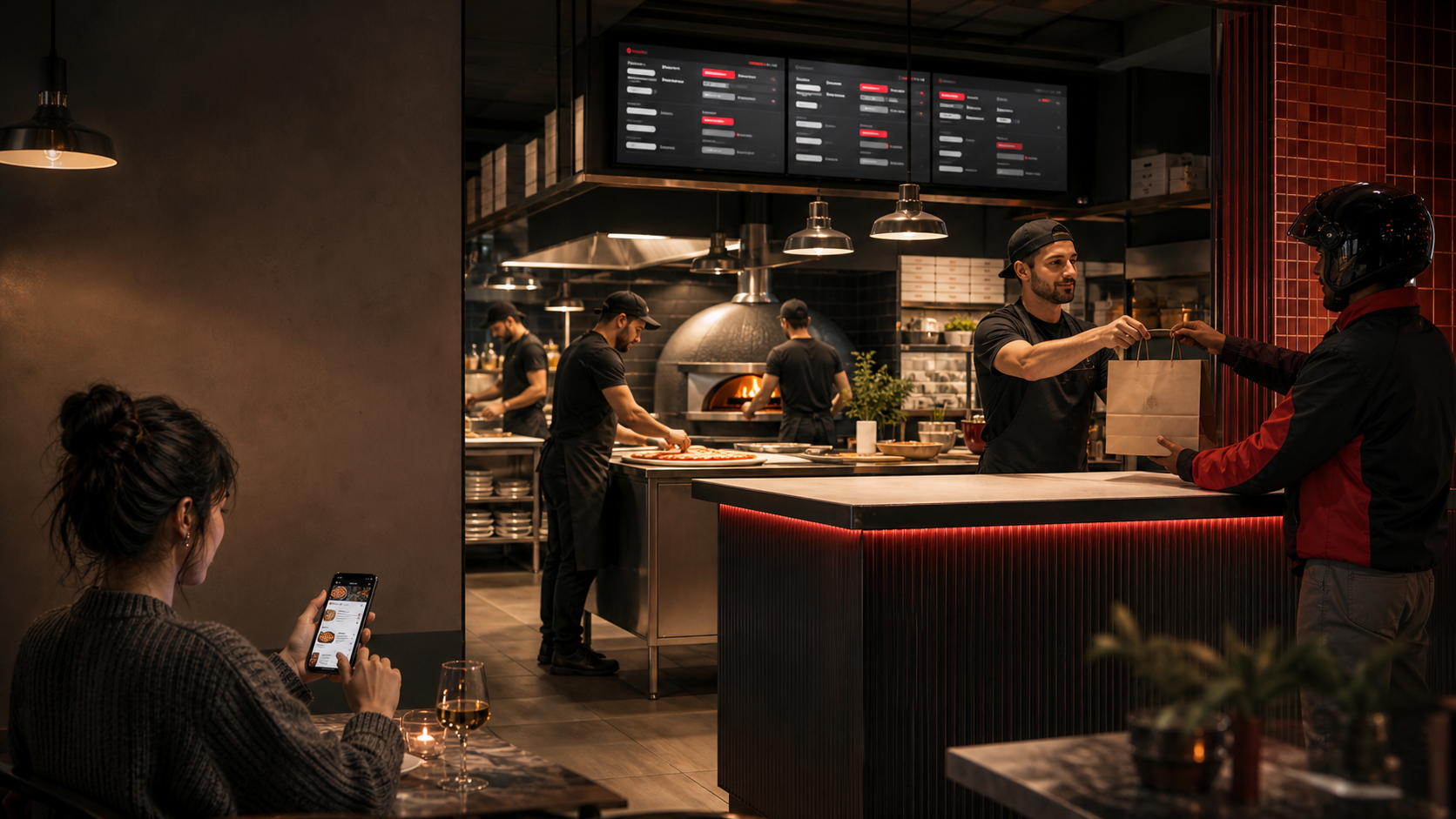
The information travels together: customer, products, hours, service, payment, department, area and status.
Lucy compares existing orders, kitchen capacity and delivery availability. If a slot is full, it offers the customer a sustainable time.
Are the 8:00 p.m. slots full? The customer sees 8:15 instead of receiving a promise your kitchen cannot keep.
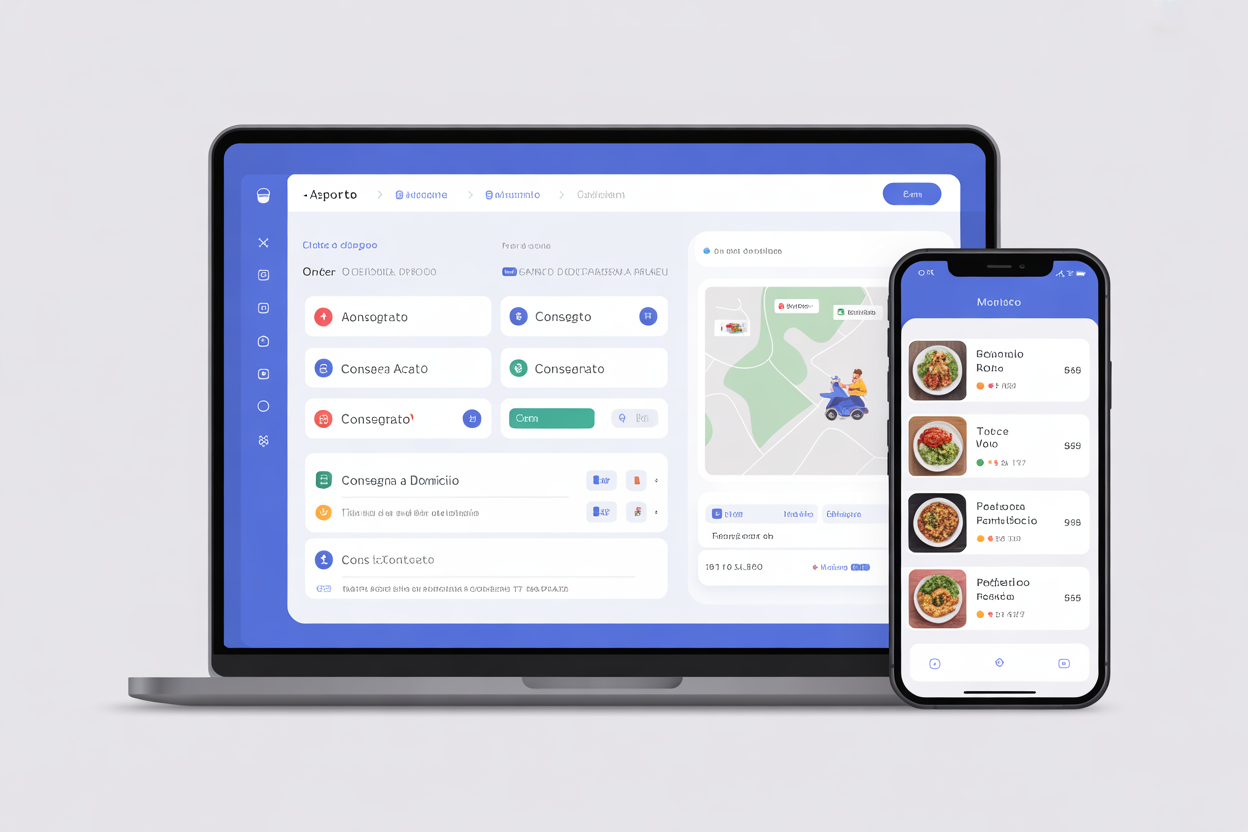
The 66 functions exist to avoid work, not to give you more. Menu, payments, cooking, deliveries and customers already remain connected.
If you want, check out everything it doesTell us menus, peak orders and delivery zones. We show you how the service would flow.
Build my example